
where dreams wither
some thoughts on working at a film archive, los angeles, earthbound, epstein, family

I’ve been unable to write for the past few weeks. Or maybe it’s been months. This last year I was writing with such consistency and frequency that losing that momentum, and becoming convinced like I can’t write, feels something like a malady. There’s something blocking my self-expression. I have a few ideas about what it is—but no matter the diagnosis, the cure is the same: I’m going to have to write my way out of this.
Others have said that the mind progresses in spirals. I think this is true. So as I proceed, forgive my lack of linearity and direction. But I simply need to write, even if its in the form a spiral.
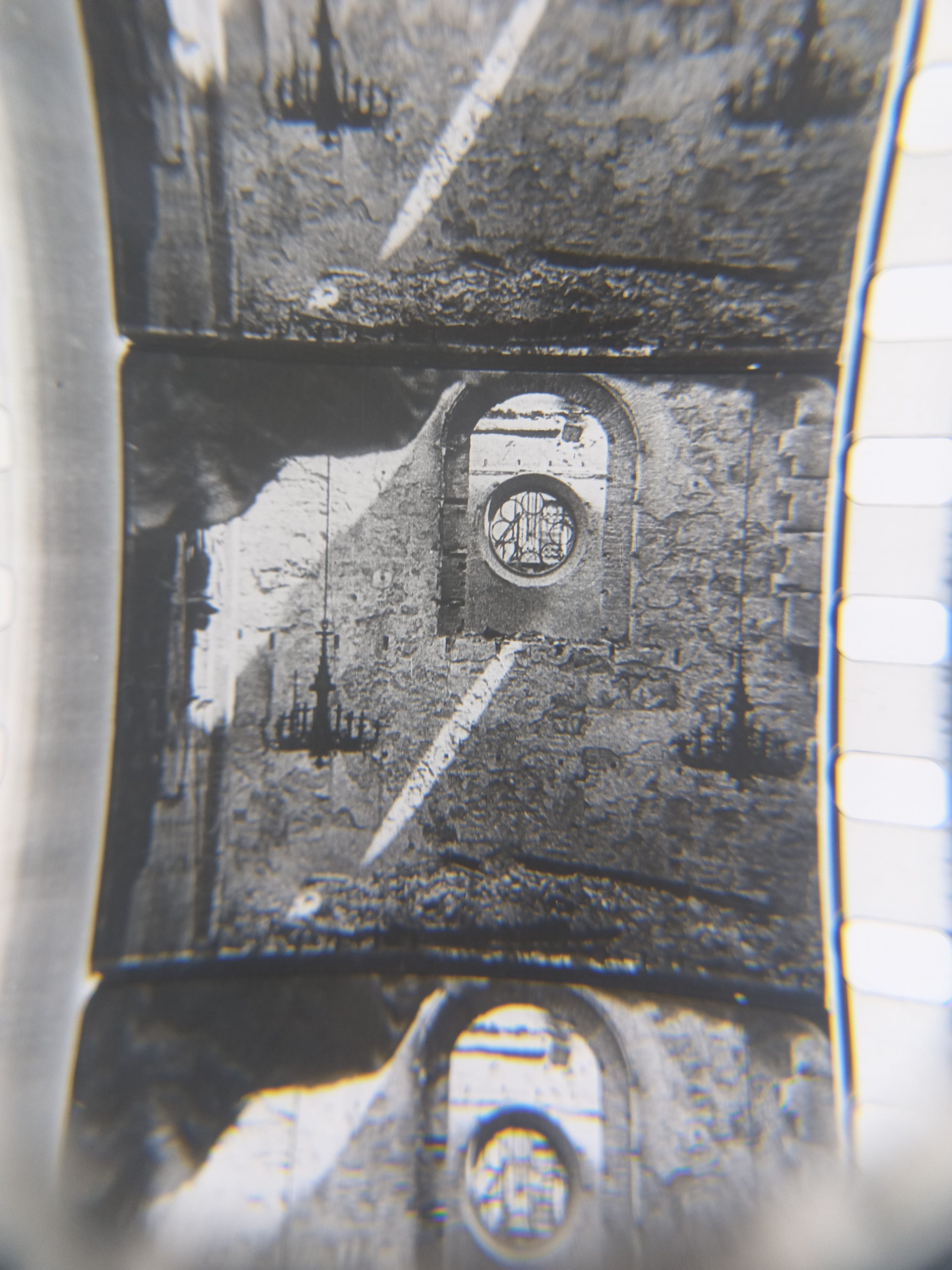
Most of my life has, in some way, revolved around the city of Los Angeles. Revolved around but never touched, until now.
I grew up in Central Oregon, where California is looked upon with derision—the residents of SoCal cities being known for routinely moving up to Oregon and driving up the cost of housing. Of course, the whole thing is a sort of local in-joke, a shared sarcasm, because we all know that the vast majority of the locals are direct descendants of Californians, me included. My parents grew up around LA, my grandparents still live in the county, and my brother is just South, in Orange county. But even beyond the family connections, I also developed an interest in film early on, and any interest in the film industry means, by default, a certain degree of interest in Los Angeles and in Hollywood.
But throughout my life I’ve also pushed this city away from me. Though I’ve had a major interest in film history for some time, I would often tell people that my taste generally veered away from most anything produced by Hollywood—that I preferred independent and foreign films. I lived in Orange County for four years when doing my undergrad and developed a general disdain for the city.
And yet, here I am. Right in the heart of the American film industry, living in Los Angeles. Not only that—but I’m actually enjoying myself. I love this strange city and the multitudes it contains. It’s been wonderful to explore different areas, visit the numerous cinemas, and try some of the diverse local cuisine.
Our journey west towards California really began with a drive East, to stop in Baltimore for a week. The biggest event in my field was happening there, the annual, national meeting of the association of moving image archivists. Most everyone I know who worked in the field would be there, and going was part of a calculated bet, a bet that my wife and I would be able to move to LA without jobs and figure some sort of employment-situation after we got there. I was hoping that by going to the AMIA conference, that I would meet and chat with some film archivists who could help me find a job in the city where film preservation is most needed.
“We often wonder where all the films that are made and used a few times go to, and the questions come up in our minds, again and again: Are the manufacturers aware that they are making history?”
So goes an editorial published in the dull-sounding View and Film Index, from an issue in 1906. If people were aware of the need to preserve films even in the sixth year of the 20th century, why was the rest of this century nonetheless full of confusion about the importance of preserving film as a historic artifact? Why did so many films have to be lost? Why do museums, universities, and archives still struggle to find funds from an industry that seems endlessly profitable? Why is there so much need for film preservation and yet nearly no demand for film archivists?
Many think that film exists to create a fantasy structure, to provide escapist illusion—but this is a half-truth. Cinema, really, is the medium of disillusionment. But in order to disillusion us, it must continually generate illusions, dreams, and fantasies. Yet unlike literature, which begins from the blank page, cinema does not begin from the blank frame. As soon as a negative is exposed to light, it begins to reflect the reality outside of it. It gives us a mirror, disjointed from the everyday passage of time.
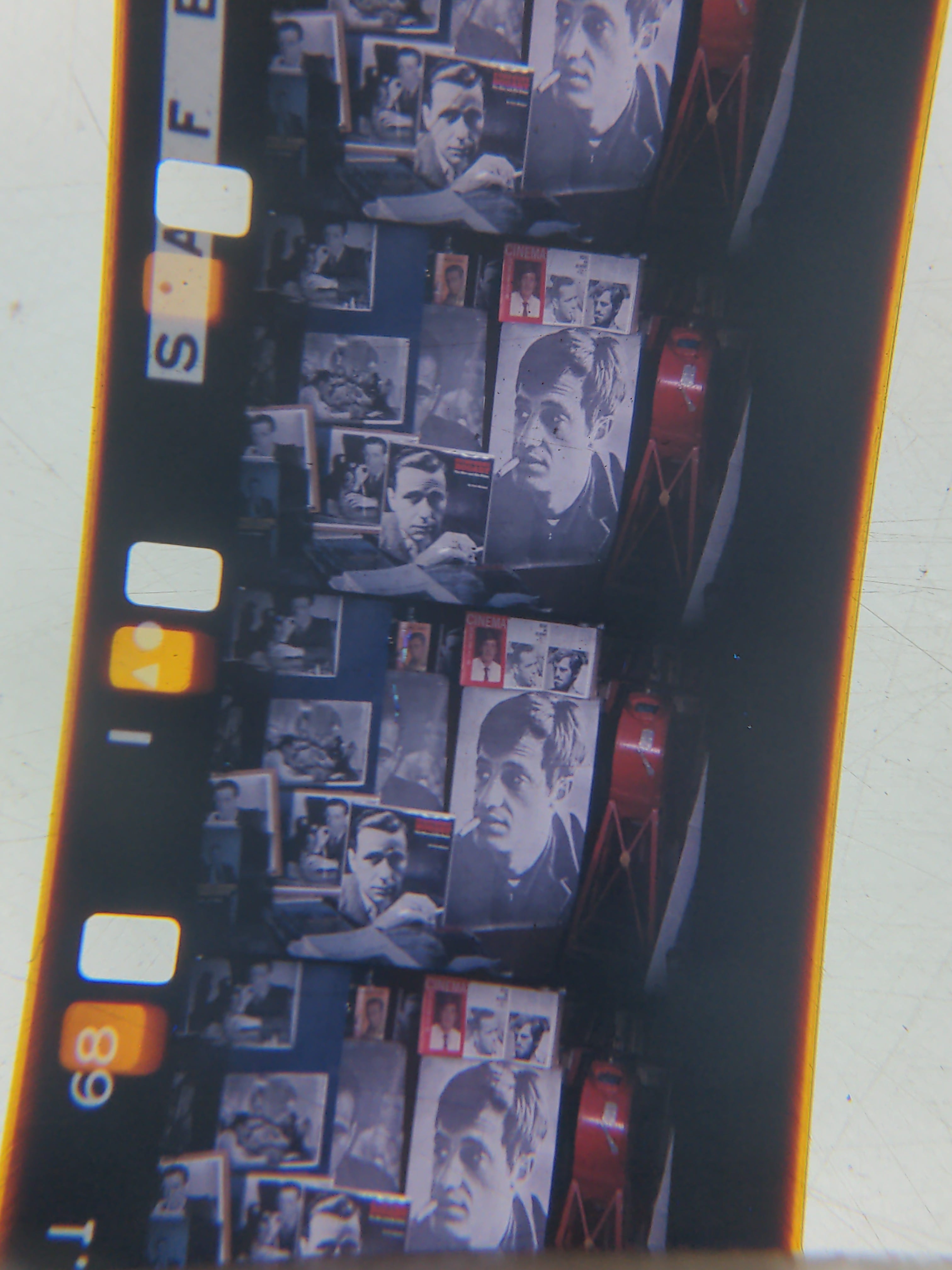
The novel need not return to the basic experience of life. Often it takes everydayness as its beginning and then builds upon it in spiraling, weaving metaphors and webbings of meanings—until one enters the sublime realm of ideas, rhetoric, and imaginings. But film, for all its flights, fancies and lies, must always continually return to the terrific mundane. Even in the fantasy-dreams of George Melies, one cannot seem to forget the fact that one is simply looking at people, who eat, drink, get bored, walk around, and sleep the same way anyone does. One can more easily forget these facts in literature, and must be deliberately reminded of them, even in a disillusioning parable such as Don Quixote.
Cinema disillusions us as an inevitability of its form. We are lured into the world of a film, the same way we are lured into the world of a dream. In drowsy darkness we see inexplicable images. It ends suddenly. The lights come on as the unreality dissolves away, we return to everyday life. Disillusionment is essential to cinematic narratives as it is essential in the form of its presentation. We see this especially in contemporary cinema, where audiences have become well-accustomed with the trickery inherent in filmmaking and where films often ground their sense of reality only in opposition to that which feels cinematic.
Los Angeles is, stereotypically, the place where the most movies are made. Not, perhaps, the best movies, but the most—with the highest budgets too. Or if not the most (India beats us many times over), then the most iconic. Regardless, because Hollywood is the home of so many films, it is also where the films die. For much of film history, studios saw no value at all in preserving their films. They would burn them, toss them in the ocean, chop them in half with an axe—anything to prevent their piracy and/or preservation. Film as an object has rarely been treated well in the city which is most famous for it. And though much progress has been made, it is still true. Preservation never seems to be anywhere near a top priority for studios or related institutions. When the Academy (of Oscars fame) axed entire departments related to preservation (in 2024, right as I was in my program), it was shocking for my field, but it was also indicative of a broader trend to shift focus from preservation. Though considering the recent mergers and great slowing of amount of films produced per year, the focus does not seem to be on production either.
But this does not change the fact that the films produced on film, actual, real film, often end up staying in LA. And there’s no denying that its actually a terrible place for them to be—the area can be incredibly hot and even humid, the exact opposite conditions that films should be stored. It’s the place where these dreams wither.
Sometimes it feels like our popular culture has become apprehensive and reactionary. Our politics moves at breakneck speed and is highly productive in cultural terms, with everyday feeling like there is some sort of new political event. Cinematic culture seems to move at a snail’s pace by comparison. Music often appears this way too.
But I really don’t think this is the case. It’s just the most prominent and powerful producers of culture which have slowed, and become reactionary. People find a way to make culture happen. No matter what. I am certain many of the greatest films made today rarely even grace the screens of arthouse cinemas.
I believe the montage might be the cinema’s greatest contribution to human understanding. I mean this in the full Eisenteinian sense, but this statement also holds up for the common understanding of the word. The scene in the movie where a character stays up all the night researching something—we enter montage. The period where a character enters a state of depression and isolation over many months—we enter montage. Two characters experience a blissful day without conflict—we, more often than not, enter montage.
Hitchcock rarely used this technique. His philosophy was that drama was “life with the boring bits cut out”. But montage is an arrangement of moments, typically of equal rate, put together like a temporal bouquet. A particular display of a general period of time.
Thinking about life as if it were a film is usually not healthy, though it may have been somewhat inevitable throughout the 20th century, the years where it dominated our imaginations. But here’s a case where cinema has given us something like a Frankl-esque therapeutic tool. If one imagines certain moments in their life as if they were passing through a montage, they may find it easy to approach them with levity. It’s a reminder of how we’ll remember moments after they pass, and by imposing that on the present, it can help one see that it is a moment. Or in Frankl’s terms, that it has all already happened once, and we are going through life the second time.
I remember with clarity a moment in the fifth grade where I was preparing a tri-fold presentation on the country of Britain. I put on Tycho’s album, A Walk and I imagined that moment as if it were a montage—and I finished it with great focus and levity. I have read many books this way. It is almost like the moment I cease imagining it as if I were in a montage that I feel the drag of everyday time. Which I find inherently discouraging. But perhaps this is another malady, rather than a virtue. I don’t know. What is the proper way to orient yourself towards the passage of time?
As I write this now, I am listening to “Sky (i)” by Bby Eco, and I am imagining myself finishing as I begin. I turn off the internet, I plug in my headphones, and I let time pass.
I watch movies and imagine life. I live life and imagine it’s a movie.
When dreams wither, where do they go?
Into the air? Into the ground?
They must go somewhere.
In Baltimore I met many others who work in my field, and a few of them were even kind enough to agree to meet up with me when I would eventually make my way out to Los Angeles.
It was a conference just as one imagines it. Full of talks, questions, conversations. But the final night had a mysterious event listed after the closing dinner. A local art collective was putting on an event and invited all the film archivists to come out to their venue to see their space, hear them play some music, and play an eclectic collection of films.
Over the convention, I made friends with many people, but no one was friendlier than the projectionists. In the field of film preservation, projectionists tend to have the most lively personalities among them—genuine enthusiasts, who care deeply about the nuts and bolts of presentation, and typically avoid overly intellectualizing films. I fell in particularly well with a group of folks, mostly made up with projectionists who work in Pennsylvania such as the Mahoning Drive In and the Ambler Theater.
Unsure of what exactly the event would even be, I trudged through the then-snowy streets of Baltimore to an address I had pulled up on my phone. When we arrived, it appeared as if we were simply in front of an apartment building, not a cinema, not an art space. Nothing of that sort. But we knocked on the door and were quickly let in. We snuck through crowded hallways of what seemed to be simultaneously a church within an apartment. The roof sloped, there was an altar, and stained glass. Projectionists were furiously setting up 8mm projectors to put images on both sides of the sloped ceiling, while also setting up instruments on the stage. They seemed eager to impress this group of archivists from all around the country... And impress us they did, it was a wonderful cacophony of projected images and ambient-ish music. Me and the group of projectionists were obviously very into it, but so were folks who I didn’t expect to show up--people higher up at film studios and prestigious non-profits and such. It was nice to see them in such a DIY space, nice to set aside all our discussions about best practices and simply witness people making culture happen. I think of all the pioneers of our field, it would be Langlois, who was known to project films in stairwells, who would have really gotten a kick out of it.
I know where many of the withering dreams are. They’re in Los Angeles. They’re in warehouses where the golden summers that the same films invented as a vision of American paradise rot away, crackling, bubbling and turning to dust. When these films were projected they may have seemed like eternal images. But they were not. When one puts up a an icon upon a wall, it may seem to be an eternal image, but it is not. An icon ages, and incorporates its age into itself. It is a reminder not of what it once was, but that what once was has become what is now. Though we must always desire to restore things to their original state, so that we may gain some fraction of historical understanding regarding it, the restoration betrays the object.
A film is a chemical product. It is bound together by humans and will inevitably come apart. But we imagine movies are not things. Yet they are.
They say that icons are windows into heaven. This may be true. But the window must remain on Earth. And on Earth, everything withers.
Do not be mistaken: young people want to work. In fact, all the young people I know want to work quite badly. It’s the jobs that have changed. Even a Master’s degree in many fields is in no way a direct pipeline to career success.
None of the jobs I applied for or officially interviewed for went much of anywhere. It was frustrating in the moment, it made me doubt the validity of my degree, my skills, my entire life decisions that had brought me to this point. But in reality, even in my incredibly niche field, publicly-posted jobs are still ridiculously competitive. I would often see who got the jobs I would apply for later on LinkedIn, and they often had much more experience than me. I’m talking, like, 10-20 years more experience! It felt hopeless to compete against such candidates, many of whom had been laid off from their previous jobs due to consolidation, government funding cuts, or even directly from the command of Elon Musk’s DOGE. And I have not even mentioned the jobs slashed by ever-improving AI, even in my field (metadata, for instance). It made me wonder if my skills were needed at all.
But I hoped that if I talked to enough people in my field, asked enough questions, and put myself in the right place—then I might just have to wait for the right opportunity to crop up. This turned out to be the correct strategy, and I got my current job in a very unusual way. In my last position, I took someone on as an intern. This intern was the one who introduced me to someone at the conference who eventually introduced me to other folks in Los Angeles—and it was them who put me in touch with a potential employer.
And now, after getting hired and getting tours of various other archives in Los Angeles, it’s become painfully obvious to me that my skills are needed, as much as ever. It’s just that many places aren’t hiring, partially due to an uncertain economic future, and archives are never the most obviously profitable part of a business.
But this journey to get a job also convinced me further that one should never, ever be a gatekeeper in their field. You should always put active effort into helping young people develop into professionals, where you can, and you don’t need to be high up to do this. Taking that intern on did not have an obvious, immediate “reward” for me, but I think that being nice to people will inspire them to be nice to you in turn—and will perhaps inspire them to introduce you to other nice people. Now is not the time to give up on our youth.
Speaking of youth, I have just replayed my favorite video game, Earthbound. I hope I’m not exaggerating when I say that this is probably the most influential piece of media on my taste. It’s one of those things I’m always going back to in my head, comparing other things to the aesthetics of the game. One of the reasons I’ve had a continual obsession with it, is because I adored the game before I could even play it. I watched videos of it, listened to the soundtrack religiously, and even read fan forums before ever actually playing it. Anyone who knows anything about the game could tell you the reasons why it’s been so inaccessible. Anyways, I was only able to start playing it around 2013-14, which was the perfect age for me, right at what I would consider the end of my childhood.
I love the design of the game, the characters, the areas in the world, and the battle sequences. Basically any game that feels influenced by it instantly clicks with me: Lisa, Undertale, Yume Nikki, Space Funeral, etc. But it’s not just that I like things which are influenced by it; anything I see which reminds me of it feels like home.

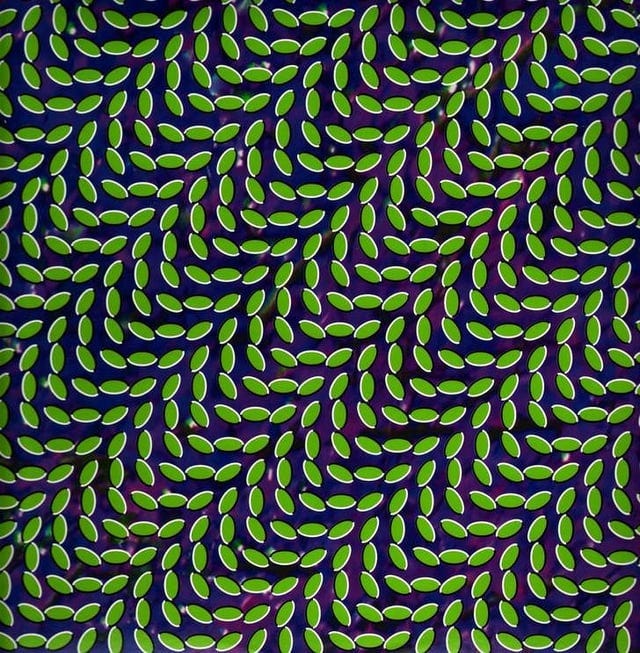
The backgrounds of the game resemble optical illusions, something I’ve been attracted to since I was a child. When I look at the album of Merriweather Post Pavilion by Animal Collective (my favorite band of the ‘00s-’10s), I see the background to a battle screen from the game:
When I first saw Hausu, I immediately fell in love with it because it felt like its aesthetics and narrative logic were perfectly in line with Earthbound.
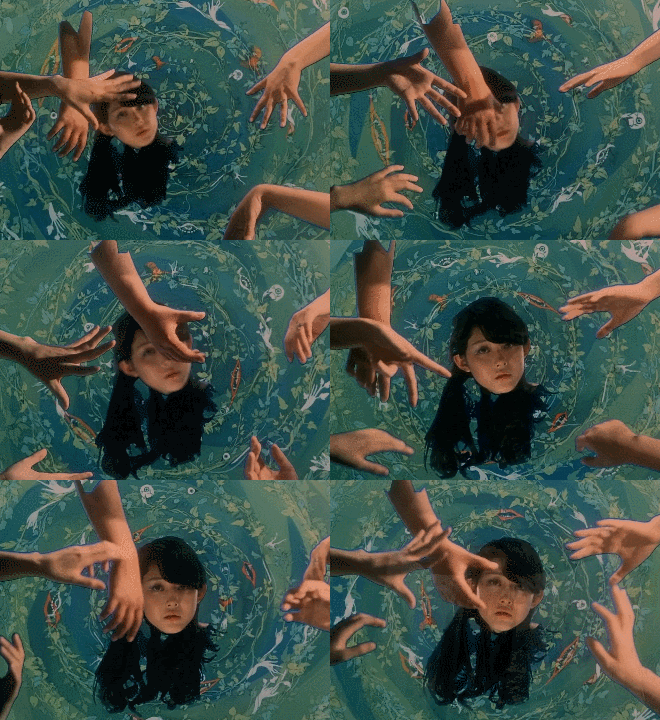
Hausu contains that same rare balance of childish whimsy, absurdist humor, psychedelic visuals, nightmarish violence, and unabashed optimism.
It would be a forgivable mistake to think that I moved to where movies are made, from where movies go to die. After all, Los Angeles has Hollywood, and Rochester has a museum where they seal films into mausoleum-like structures for the indefinite future. But the opposite is really true: I moved from where film is made, to where it goes to die. Film, nearly all motion picture film now, is made in one place—Kodak in Rochester, NY. It is in Los Angeles where this film is used, and where movies are haphazardly strewn all about—in bedrooms, basements, and offices. Film starts dying, really, as soon as it is born. But we can at least give them as dignified and slow a death as possible.
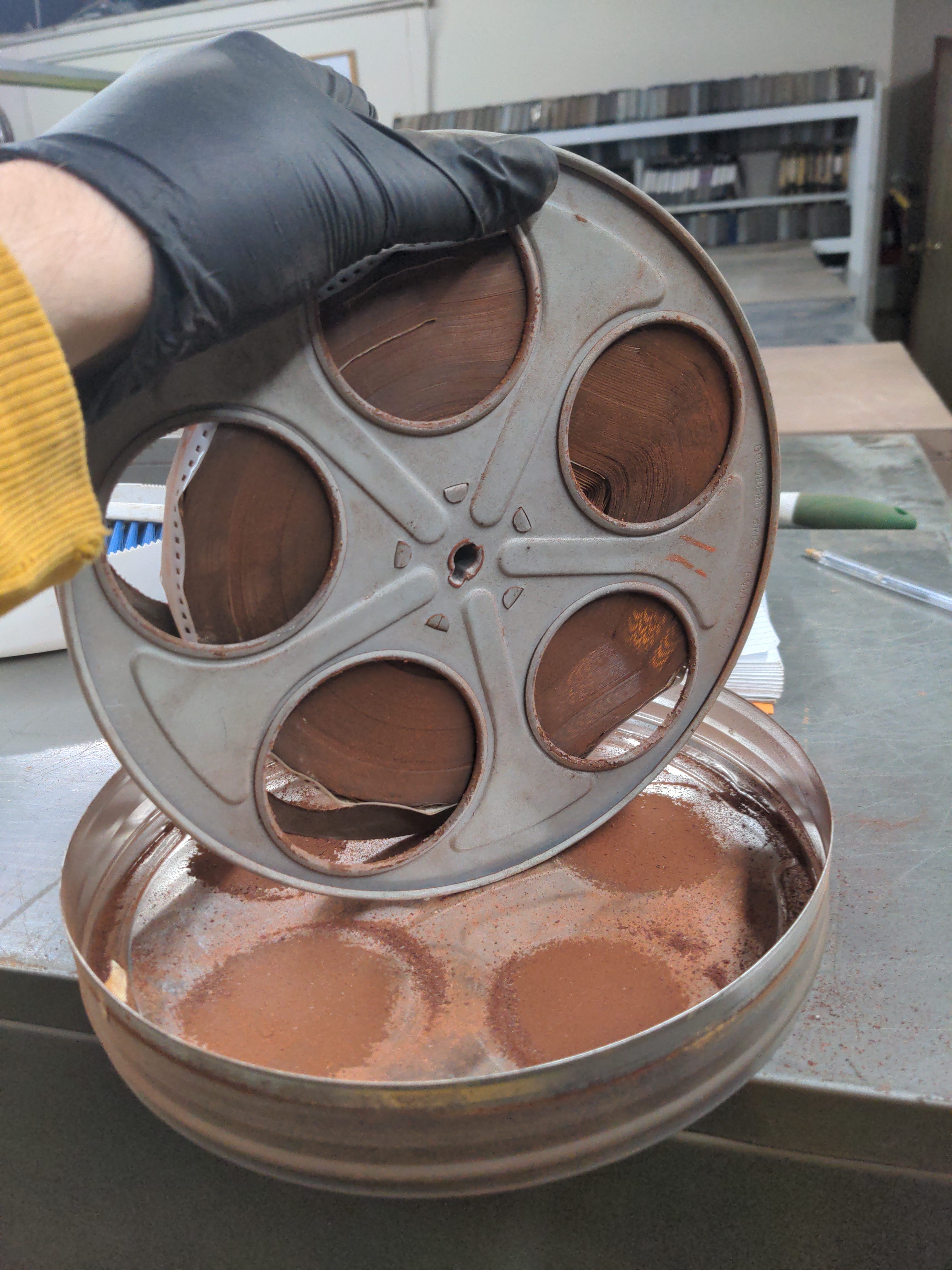
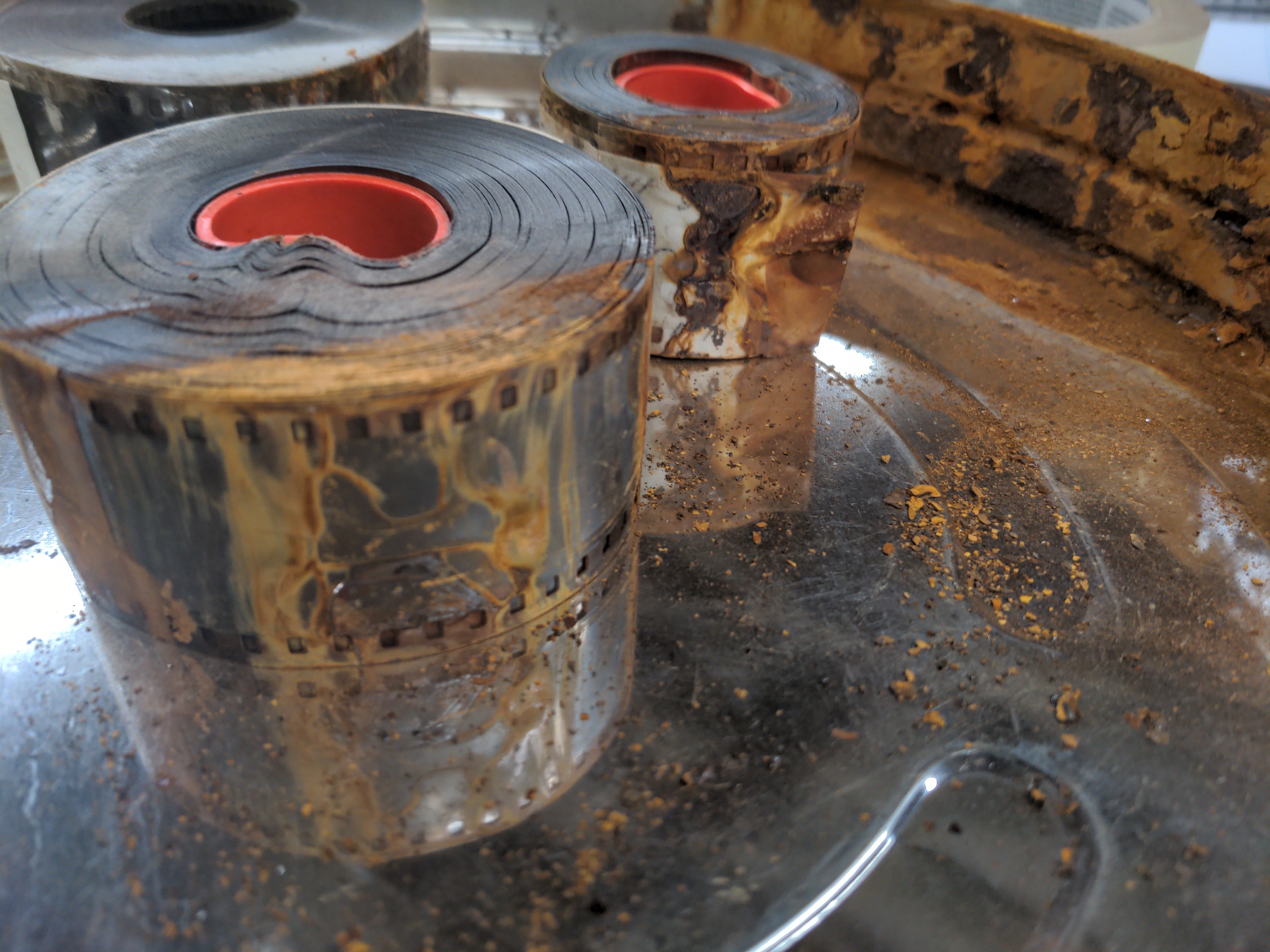
The work of a film archivist is poetic in the abstract, but quite gritty in reality. I work in a large warehouse-like structure, the shelves stocked with films, many from the 1920s and 30s. It feels like I have access to a beautiful bank of human memory. Many of my days now are simply filled with me opening cans, often entirely unlabeled, and figuring out what is inside of them. It involves dealing with a lot of dust, a lot of chemical decomposition, and rust. These are not exactly the things that made me want to be an archivist, and I’m grateful for my studies, because it is a constant reminder of the what can be reaped when preservation is taken seriously. If I did not study preservation prior, I would not understand that the work I am doing today needs to be thought of in the scale of centuries. It may well be the case that here in 2026, I am working on cleaning up a film from 1926, so that people in 3026 can understand history a bit better. The poetry helps me work through the grit, the dust, even the discomfort.
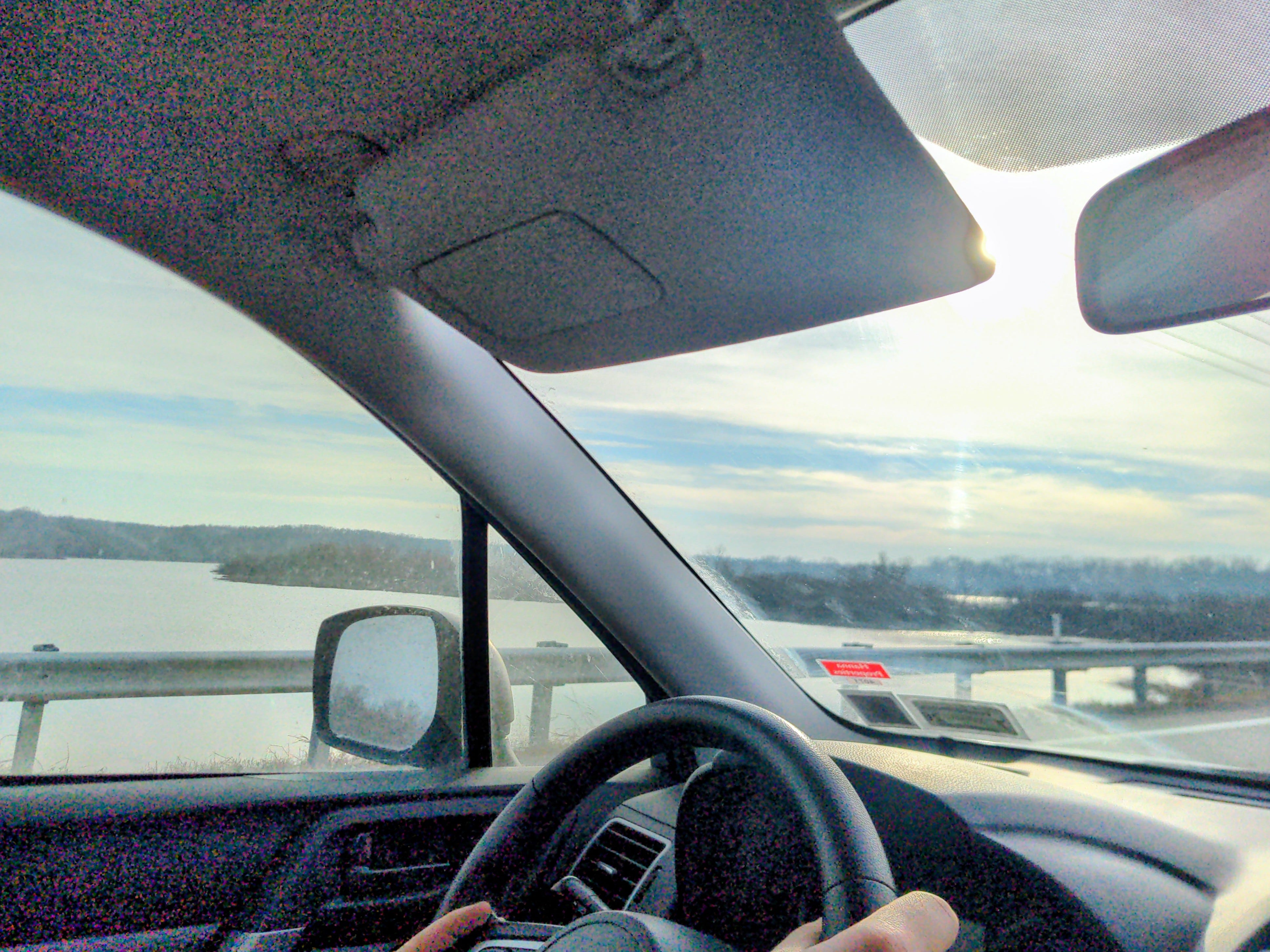
Our move involved a drive, from Rochester to Los Angeles. We couldn’t afford a moving truck, so we simply packed out Subaru to the gills. But we also had to leave enough room for Pixel, our cat. This meant getting rid of a lot of stuff. The majority of what we had owned. I vividly rememeber that last day in our Rochester apartment, where I was grabbing anything that wasn’t fitting in the car, and that hadn’t been designated for storage and running across the street to throw them in the dumpster. The snow was brutal, interfering with my vision, as I’d wait for the street to clear to jog across the ice-packed road. I listened to Danny Brown’s Stardust and Bladee’s Cold Visions many times as I was horrified by how much stuff we had accumulated. I thought we had been living minimally, but when you have to venture out into the snow of Western New York in order to dispose of things, suddenly you realize that, yes, you have been living a life of needless vanity, consumerism, and mindless accumulation.
Theoretically, the concept of a piece of art which is simply pure, unabashed joy is the most appealing of all. Yes, it’s good to have work which reflects the dark aspects of reality, but shouldn’t art simply offer an escape? Yet, the narratives we seem to come back to again the most are ones which move a character from a state of naivete to one of maturity and bravery. This too is a form of disillusionment.
One of my favorite aspects of Earthbound is the way it cares for the experience of the player. It’s not just about the gameplay, or even the story, it’s also about the experience of spending time in Earthbound’s orbit. Video games are, of course, huge time sinks. Most game companies seem not to bat an eye when confronted with this fact, the same way social media companies willingly continued their designs after discovering they were addictive (a fact recently recognized by the law!) but no so with Shigesato Itoi et al. If you play the game for too many hours in a row, the protagonist’s father calls you and tells you that you “shouldn’t work too hard”. This is an uncommon practice for games even nowadays (barring things like Animal Crossing), which are still designed to extract as much attention from you as possible. By contrast, it simply feels like Earthbound cares about you, that it wants to give you an actually beneficial experience.
This is similarly reflected in the way that the game has a few key moments in it of what I’d call “forced reflection”. Another downside to playing video games is the way that they can encourage a rushed and hurried mindset. Games can leave your mind reeling and make the everyday perception of time feel comparatively dull. But Earthbound has a few moments in it, two in particular, which do not focus whatsoever on anything associated with traditional game mechanics, gameplay, narrative… Anything.
It first comes when, about halfway through the game’s narrative, a friendly Mr. Saturn offers you a cup of coffee. Typically, you’d expect this to heal your character. But instead, the game disappears, and the player is simply delivered text in front of an animated background.
The text tells you to take a moment to rest, appreciate how far you’ve come, and assures you that you’re doing the right thing. It seriously feels like being cared for by a higher power or something.
In the original Japanese it ends by saying something closer to, “May the goddess of good fortune smile upon you always.”
It reminds of moments in some of my favorite slow-paced films. Sequences that force the viewer to really sit with time, and reflect. It’s as if you’ve been duped into meditating. I could point to many such sequences, such as a few I just witnessed in my first viewing of Reygadas’ Japon, but it seems undeniable that Tarkovsky is the real innovator of these kind of sequence such as in Solaris, Andrei Rublev, and Nostalghia. The scene that’s always at the top of my mind in this regard, though, and the one that really puts me into a contemplative headspace is in Stalker.
They say that prayer is talking and that meditation is listening.
I’ll get to the prayer part later.
In Rochester is one of the only people who has read any of my novel so far. His name is Robert, and I first met him when I was cutting my teeth at the neighborhood deli. I’d serve him a sub, and notice he was excellently dressed--always with a color-coordinated jacket and a hat. One day I noticed he was reading a book about the Italian filmmaker Visconti, and I just had to say something. We quickly bonded over a few deli conversations, talking about theater, Doestoevsky, and Bergman.
When I began working as the manager of the Dryden theater, Robert would always come to the most interesting films we played, and our conversations continued. Eventually I got coffee with him and mentioned the novel I was writing. He expressed willingness to read the draft, which is always a nice offer, but rarely a sincere one. But I presumed his offer was genuine, not in the least because he mentioned his habit of memorizing entire poems. Surely, this was a reader actually willing to engage with an unfinished novel. And not a short one, at that.
When I met up with him for the last time before the move, when I was in the aggravating process of sorting through what to keep and what not to keep, he said something very wise.
“That’s the best part about moving,” he said to me at Bookeater, “getting rid of things.”
It’s strange that Earthbound brings me so much joy, though it is a a game that is all about the end of childish innocence. But I think this is the case for many great narratives. The pleasure of the “Shire” sequences comes from us knowing that they are a blissful prelude to the serious concerns of life, even in a fantasy setting.
The game truly does take a dark turn towards the end. Far too much happens to explain it succinctly—but the players’ characters (who are children) get their brains removed from their bodies and put into robots in order to travel back in time to kill an evil force called Giygas. What is Giygas? Throughout the game, you’re not quite sure if he’s more of a demon or an alien—the game’s blending of 50s-influenced sci-fi and a vague spirituality is one of its strong suits. Anyways, the game’s famous final sequence sees the protagonists passing through a disturbingly organ-y map in order to fight Giygas.

Throughout the extended final boss battle, one barely gets any clearer an idea of what the thing is, but it is depicted in a way which is genuinely quite scary—it gave me nightmares the first time I saw it. It feels jarringly, disproportionately dark compared to the rest of the game. And yet, it is this jarring left turn that brings me back to this game again and again.

As you fight Giygas, his form degenerates until it becomes incomprehensible and seizure-inducing. The music turns to noise and the battle just keeps going. The whole experience is designed to make you feel hopeless, as a player.

But eventually the player inevitably tries an option that has served little use throughout the game—one of your player characters has the ability to “Pray”. It’s usually does little good, just healing your party slightly, and up till now has probably only been used in pinches where the player thinks they are about to die.
In the context of the Giygas battle though, once you start using the “pray” ability, the game becomes very cinematic, and we get to see various characters from throughout the game who feel a sudden urge to play for the protagonists’ safety. It’s only through prayer that Giygas can be destroyed. It makes no reference to a God helping you or rescuing you—just prayer. It’s a powerful concept.
It was actually this final boss that served as my introduction to the game. I was around 10 or 11 years old when I discovered Earthbound through reading a webcomic called “Brawl in the Family” (which I discovered through searching for “Meta Knight” on Google Images—this is how one used to discover cool things on the internet) which made frequent references to Earthbound and to its sequel Mother 3 which was famously never released in the US. I wanted to learn more about Earthbound, and quickly found videos of the Giygas boss battle on YouTube. The whole thing fascinated me, and I wondered what sort of game led to such an intense, psychedelic, terrifying ending. Looking up more details about Giygas online will quickly bring anyone to the ever-popular theory about Giygas being a fetus. I won’t delve too deeply into it, but the basic concept is that you are traveling back in time in order to kill a great evil even before it is born. The thing that blew me away about it was the fact that there did genuinely seem to be the facade of a fetus hidden in Giygas’ character design:

Even more disturbing was the fact that the creator of the game, Shigesato Itoi, discussed that the inspiration for the game came from him watching (what he thought was) a rape scene in a film:
“In an interview on his website, Itoi describes how his inspiration for the final battle with Giygas in EarthBound resulted from a traumatic childhood event where he accidentally viewed the wrong movie at a theater, a Shintoho film entitled Kenpei to Barabara Shibijin. The film featured a murder scene near a river that Itoi mistook for a rape scene which affected him so much that his parents began to worry about his well-being.” (Wikipedia)
This was, in fact, one of the first times I had ever heard of “rape”. The concept was quite new to me as an 11 year old, and was intensely frightening to me.
The cursed, nightmarish qualities of the sequence were unforgettable for me. I had the experience many horror fans describe when they watched their first horror movies. Often they are exposed to it a bit too young, at first it terrified them and they hated it, but then they grew a lifelong fascination with it. But this was also one of the first times I had ever exposed myself to the analysis of symbolism in a piece of media. In many ways, this was the moment that I moved from a naive enjoyment of media to a more critical engagement with it. The end of a time where I was simply drawn to media that sparkled and kept me engaged, and started to actually think about it. The world was a serious place, and this could be reflected even in the media that brought me joy.
It would be many years until I actually played Earthbound, but I frequented fan websites about the game. It stuck in my head. Perhaps because it felt like the extremity of my childhood, its limit. When childish naivete withers away, what remains?
I went to Bookeater nearly every weekday over the last year in Rochester. It was my favorite cafe--it met all of my strict criteria for a cafe suitable for writing in: the tables weren’t wobbly, there was free wifi, and there were ample outlets for laptops. Not to mention a bookstore, a super nintendo available to play at any time (with Earthbound on it), friendly baristas, and a truly remarkable price for a black cup of coffee (which included free refills!) I included it in a scene in our little movie, Alex Can’t Find a Job, where our unemployed protagonist goes in, looking for an environment to focus in but is distracted by rambling Gen-Xers and Millenials who claim kids these days just don’t want to work.
If you have read anything I wrote over the last year, chances are that I wrote it at that cafe. My writing was so attached to my routine there that I have found it difficult to write outside of it. And my novel remains unfinished. Robert emailed me today, asking if I had sent it.
I had to say I’ve had writer’s block. I’ve had it ever since I moved.
A big part of it was the move, and the stress associated with it, of course.
But there has been another factor, a very unexpected one.
The release of and speculation over the meaning of the Epstein files has had a surprisingly negative effect on my creative life. That the content of these files has been highly upsetting and disturbing, should be no surprise. But I never would have thought it an obstacle to writing, to creativity. But it is as if my entire worldview has been inverted. The world really does contain a secretive elite who seek out debased and exploitative activities. In the words of Sam Kriss,
Six years ago, something happened to Jeffrey Epstein in a prison cell in New York. I found it hard to reconcile with the basically sensible Marxist materialism I was using to understand the world. I thought social reality was essentially composed of surplus labour and the declining rate of profit, but Epstein seemed to suggest that there are things happening in the shadows that I had never imagined. In a way, it was like discovering, as a grown adult, that no, Santa Claus really is real. Santa’s implicit role is to be the guardian of the secret of the commodity-form. He hides the knowledge that all the wonderful presents are actually just a collection of exchange-values. The primordial forces of the world are fundamentally indifferent to little children, who tend not to actively participate in the labour or commodity markets. (Did you think it was a coincidence that Santa is a big guy with a big white beard, known for his impressive drinking abilities, and associated with the colour red?) Epstein’s secret is the opposite. Whoever it was pulling his strings, they were happy to let this failed maths teacher play around with their billions, pretending to be some kind of genius investor. Money is just a toy. Beyond a certain level it doesn’t really matter at all. The world really runs on stranger stuff. Magic wishes, sacrifices, the circuits of desire. Spooky flash photos of Bill Clinton and Donald Trump sharing verrucas in a hot tub. Somehow, this has to do with the fate of nations. War and revolution. Cities bombed into rubble in the lands of Armageddon. And children are not incidental; they’re at the ugly centre of the whole thing. (Kriss, 2025)
Trying to make sense of these things, to understand what it means for politics, for everyday life, for the film industry, is not only an exhausting mental activity but also one that involves a certain sort of creativity.
Let me explain. I have long been attracted to the zone of online media where conspiracy, lost media, and general eeriness all intermingle. Creepypasta was not just an obsession for me when I was young, it became a way of finding community online, of people who also obsessed over piecing together narratives from creepy media strewn throughout the internet. The epitome of this was the ARGs (artificial reality games), semi-interactable multi-media gameified narratives, like SCP, Everymanhybrid, etc. A lot of it felt quite dark and edgy at the time, but it now seems quite naive. Not to mention my fascination with horror media online was all begun by watching that video of Giygas.
The Epstein files, a release of searchable semi-redacted files online which reveal hidden narratives, and connections exposing the darkest sides of our culture? This would be the ultimate ARG, if only it were not real. There’s creativity, perhaps even enjoyment to be had from piecing together narratives through email correspondences and mysteriously oblique pictures of the world’s most famous people. Everyday there’s a new discovery, a new wrinkle, a new unraveling. The work of online self-styled sleuths is genuinely ten steps ahead of mainstream media, the house oversight committee.
But then I remember what it was all about, what all of this stuff was orbiting around. The undeniable, horrific reality of sex trafficking and pedophilia—and I feel ashamed to be a member of the human race.
How could any of this be real? How can it be that so many of the figures I looked up to as a young person--Stephen Hawking, Bill Gates, Noam Chomski—can be all involved with a world more degenerate than I previously thought humanly possible?
Not enough people have seen the video files. And I cannot blame them. One does not need to watch them to know they will be disturbing.
But when you do, there’s an undeniable reality that sets in. One can hear the phrase “solicitation of a minor” over and over until they become numb. But when you see videos of young girls dancing in front of Epstein’s desk on his private island, far away from anyone who could help them, you gain a modicum of understanding for what these words are really referring to.
Observe this video, which with the censorship added to protect the victim it depicts, barely captures anything, but the moment it captures tells us volumes about the person who shot it.
The way that a motion picture can capture a moment in time, the way that others can seemingly enter into that moment again by watching it, these things also inspire me to continue the work of film preservation. We can read about it, we can see images, but the videos can grant one a sense of immediate reality that is impossible through any other means. It is disillusioning in its uncinematic-ness. Video, too, is the medium of disillusionment.
But this is an overcrowded reality. And truth becomes quiet in a crowd.
I’ve just found out that a friend of mine was arrested (do I call him my friend now? What else would I call him? A person I knew?). He’s being charged with production, distribution and possession of child pornography and enticement of a minor. I can’t believe it. It feels too dark to be true. None of my friends saw anything like this coming. It wasn’t on accident, the victim was too young to be mistaken. On February 8th, he texted her saying:
“I really like you an [sic] am looking forward to hanging out tomorrow, but tbh I see this relationship ending in heartbreak for you, the age gap just too big to work out long term and I’m risking serious jail time that’ll start to weigh on me more."
How could he be so conscious of doing something like this, and still follow through? Even in the context of the entire country becoming increasingly aware and thinking about the implications of just this sort of crime?
Somewhere out there is at least one video, created by someone I know, committing one of the most morally reprehensible acts I can think of. It hurts me to even know it exists, but it is true.
Video can disillusion—it sometimes does not even need to be seen. In fact, perhaps the most disillusioning videos should be seen by no one—yet these are the ones which demand to be known.
It feels like the moment that I found out what Giygas was based on. Another layer of childish naivete, the inherent trust that people I am friends with do not wish to cause harm to young people, removed. There is real darkness in this world.
The film archive where I work is not far from where the Manson family lived. The beautiful landscapes around me are the same ones that surrounded those people in a murderous cult. It’s hard to imagine such things can neighbor each other in the same location.
Charles Manson moved to Los Angeles because he wanted to be famous. He wanted to be a musician, to be a star. His is the ultimate rejection of disillusionment. He could not accept the disillusionment of Los Angeles.
He lived less than a mile away from where this shot was filmed, in the first feature film Hollywood produced, The Squaw Man.
The Squaw Man was directed by Cecil B DeMille. He was not a good man, and in many ways he was the prototype for all the asshole film directors to come. The corruption and cruelty of Hollywood has been there since the beginning.
But we cannot only preserve the things that are unequivocally moral. I would venture to say that even the so-called “good book” contains few good deeds. In fact, it’s mostly people taking bad actions, and then the bad things which follow as a consequence.
Even in its earliest days, Hollywood turned away many people who wanted to be involved. Gatekeeping comes as easily as breathing in the film industry.
Disillusionment with Hollywood is part of Hollywood. The awakening from the dream is what defines the dream. The limits define the content.
We drove through the polar vortex which had come to bear down on Pennsylvania. Our Subaru got stuck in un-ploughed roads as we traveled through the Allegheny forrest. It’s hard to feel like it was real, as I sit in this cafe in Los Angeles, a cool breeze coming off of the beaches of Santa Monica, the sun beating down. Just a few months ago, we were stuck on the side of a hill in Pennsylvania, our car unable to move, my wife the only thing keeping me from losing my mind.
As we drove South-Westerly, things got warmer. We drove down to Frohna, Missouri, the town where my family of German immigrants started. My great grandmother there had 17 children.

Many of them moved to Los Angeles and then started a dairy farm called Alta Dena, which still exists today (though ownership is out of my family’s hands, after an unfortunate incident of embezzlement). Frohna neighbors Altenburg, both towns part of a community envisioned as a kind of Lutheran utopia. Not quite as radically conceived as anything like that of the Shakers as depicted in The Testament of Anne Lee. It was far more of a humble, realistic project. That region of Missouri was selected apparently because it resembled these Germans’ native Bavaria. It is truly a beautiful place, and the parts of the Stueve family that remain there were kind enough to house me and my wife. I laid in the bed my grandfather would sleep on as a child and I watched a documentary called “The New Saxon World” on my phone, which was about the history of the area. The documentary was made by Paul Moon, a talented filmmaker and someone I consider a mentor to me. His father was always known to me simply as “Dr. Moon”. He was one of the closest friends of the grandfather on my other side. Dr. Moon escaped North Korea to live in America and became a professor at the university where I got my undergraduate degree in English Literature. My grandfather and Paul’s father would teach a literature class there together, which still has a legacy in the English department. How absurdly poetic that Paul and I should be drawn together for completely separate reasons, our mutual interest in documentary filmmaking (we bonded over shared love for Herzog and Koyaanisqatsi). And how strange that he should have made a film about my other grandfather’s hometown.
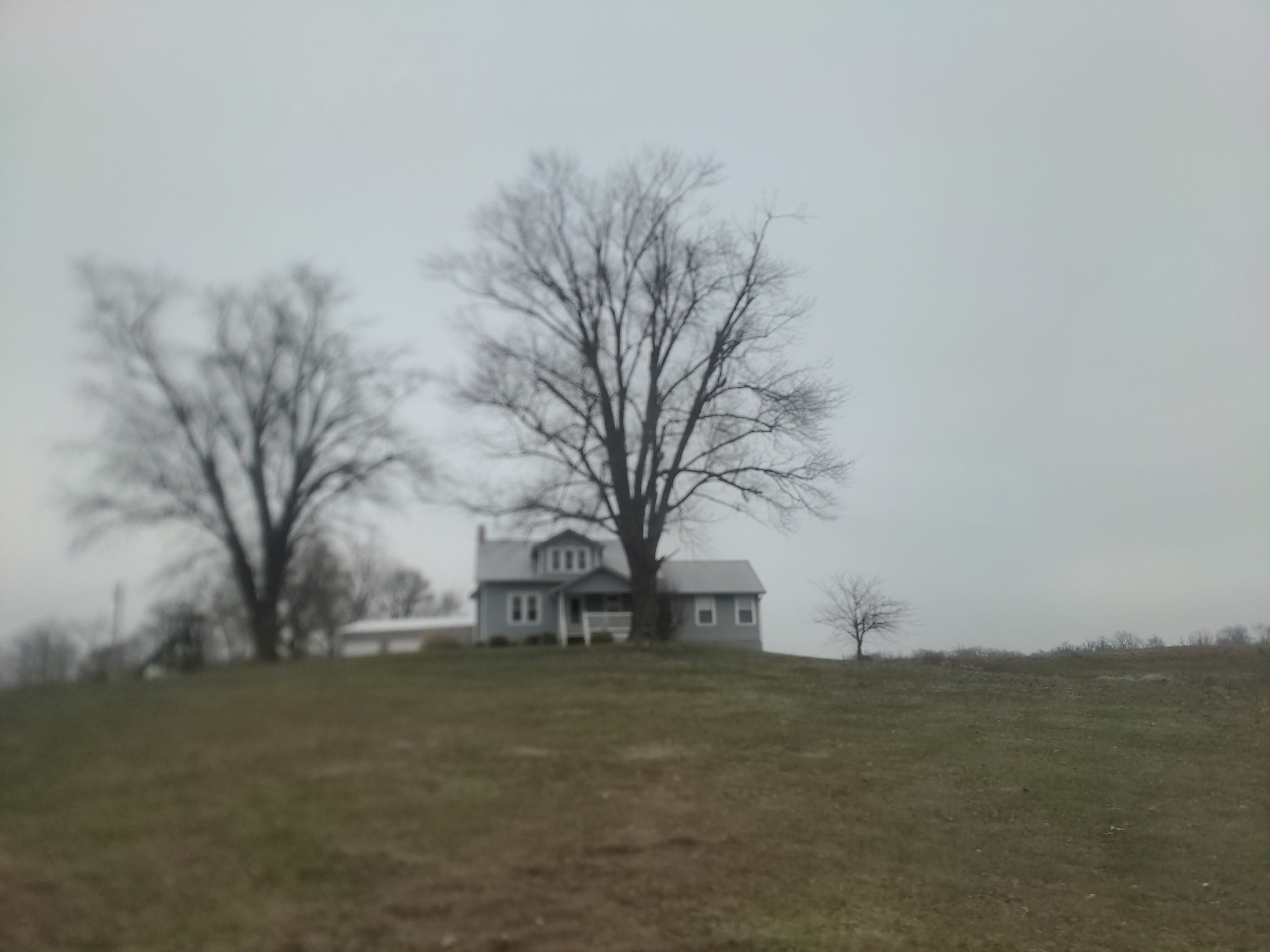
I was told to take a picture of this tree. My grandmother remembers it vividly from when she was a child. It remains unchanged, outlasting us.
The first video I ever made was about my family, called “The Stueve Family Story.” I made it when I was 13, in my grandparents house. If you watch the video on Youtube, you can see the only comment on the video comes from my grandfather, 11 years ago, which reads: “what a wonderful history.”
The real reason we moved to Los Angeles was to be closer to family. My grandparents live in Monrovia, a part of Los Angeles seemingly preserved. Going to downtown Monrovia feels a bit like stepping into the Los Angeles of the 40s or 50s. There’s a sense of smallness there not many other places in this area.
I was struck recently by the profound fact that my grandparents have lived in the same house for over 60 years. I lived in the same apartment in Rochester for 3 years, which was the longest I had lived in one place since leaving home.
It’s hard to wrap my head around the fact that my grandparents moved to California, bought a house, and have lived there ever since. It’s not a large house and it in fact used to be smaller. But it’s a house in LA county. The sort of money this house has accumulated through simply existing is probably more than I will ever be offered for any job. But there’s no use being resentful towards past generations, particularly within your own family.
Besides, my grandparents know that money does not make you happy. They’ve simply lived within their means their entire lives.
My grandfather has something like Alzheimer’s. Several people have tried to explain to me exactly what it is. But its effectively synonymous with that infamous disease. He has a hard time speaking, can barely move, and has faltering memory. He doesn’t know you’re in the same room as him until you’re within a foot or two of him.
For Christmas, my wife and I bought him a blanket as a present. Nobody else in the room could hear him say it, but he said to me in a broken voice, “I’m glad you’re here because I am going to be gone soon.”
In the backyard of my grandparent’s house is a pomelo tree. The fruits are large and yellow. They’re seems to be an ample supply of them whenever I visit them, and this has been true all throughout my life. Isn’t that alone some type of miracle, that a plant could produce food for one to eat every single day?
I always eat it the same way. Slice the fruit in half, sprinkle a thin layer of sugar on top and then dig out the triangular pieces of flesh with a spoon. After you finish, you can squeeze the juice out of the fruit and you are rewarded with a delicious drink at the end of your humble meal. It’s always been one of my favorite parts of visiting them, and for me its become a taste that is synonymous with California itself.
Now I bring those pomelos with me to work at the film archive, where I eat them in the hot California parking lot outside. As I eat fruit from a tree that has literally fed me all throughout my life, I consider the fact that my job, my field is defined by cleaning up the mess that people from the past have left us. Every film starts to decay after it is made, every fruit starts to rot once it falls from the tree.
But the trees, they outlast generations.
To have hope despite a lack of knowledge that things will work out is the very definition of hope. If we knew things were going to work out, then hope would not need to exist.
Where dreams wither, what remains?
Like most great adventure stories, at the end of Earthbound, almost everything is back to normal. The thing that has changed is you. You can walk around and talk to characters from the game. One of them, another one of those cartoonish Mr. Saturn characters, says something that I can’t help but feels like the embodiment of what it feels like to shed one’s childish understanding of the world: “I THINK NEW THINGS… DIFFICULT THINGS… FROM NOW…”

I was also at the AMIA conference for much the same reasons, but I fear I'm just not built for these things -- this field is absolutely brutal when you aren't.
Can I please just work in an archive somewhere and never have to talk to anyone again?
I have many things I wish to say in response to this at a later time, but for now...
"They say that icons are windows into heaven. This may be true. But the window must remain on Earth. And on Earth, everything withers."
🗣️🔥🔥🔥